

Koonung Heights Uniting Church
Service of Worship at Home

In the time of Herod we long for God to break in.
Advent 1 – 30 November, 2025 – 10am or whenever possible
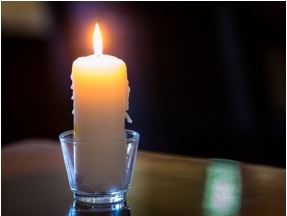
You may like to light a candle during your time of worship.
Feel free to text the Peace to other members of the congregation.
Introit: “O Come, O Come, Emmanuel” – (Words © Susan Wickham 2021 – Tune TiS 265)
O come, O come, Emmanuel,
and fill our lives, all dark and fear dispel,
as once an exiled people you found,
redeemed, restored and set on holy ground.
Rejoice! Rejoice!
Emmanuel shall come to us and in our hearts will dwell.
Lighting the Christ Candle:
As we enter this Advent season we await Emmanuel,
we light the Christ candle,
reminding ourselves of Christ’s constant presence with us.
In times when we are afraid, and long for God to break in,
let us look to this light and remember that we are not alone.
May we always seek this guiding light in our lives,
and remember that we are called to carry this same light into the world.
Acknowledgement of Country:
This is God’s land and God’s Spirit dwells here.
As we gather for worship today,
I acknowledge the Wurundjeri WoiWurrung
People of the Kulin nations,
traditional custodians of this land under God.
I pay my respects to their elders past and present,
and to the leaders and generations to come.
Call to Worship:
On Sundays and Mondays,
on good days and bad days,
early in the morning and very late at night,
here in this room, and out in the world,
God, we long for you to break in.
Meet us in this space.
Surprise us with your presence.
Fill this room with your good news.
With hope, we sing, we worship, we pray.
Amen!

Advent Candle:
In a world full of fear, where do you see hope?
We see hope when we look to the next generation.
We feel hopeful when we gather together.
We know hope, deep in our bones,
when we dream of a better world.
You are right.
Even in a fearful world, hope is all around us.
Today we light the candle of hope as a reminder of this good news.
May this flicker of light help us remember that we have reason to hope.
We Sing: “Come, thou long expected Jesus” – (TiS 272)
Come, thou long-expected Jesus, born to set thy people free;
from our fears and sins release us; let us find our rest in thee.
Come to earth to taste our sadness, he whose glories knew no end;
by his life he brings us gladness, our Redeemer, Shepherd, Friend.
Leaving riches without number, born within a cattle stall;
this the everlasting wonder, Christ was born the Lord of all.
Call to Prayer:
If we long to feel closer to God, then prayer is a step in the right direction.
When we thank and praise God, we remember who God is and how we have been blessed.
When we confess, we lay our hearts before God, and pour out the truth of our lives.
When we are open with the Creation, in that simple act, God somehow always feels closer.
So let us join in prayer, as we invite God to draw closer and break in here.
Prayer of Thanksgiving and Confession:
God who waits with us, and for us,
we are thankful that we can be sure of your love
at all times and in all situations.
At the start of season of Advent, the start of a new church year,
we are thankful for this gathering,
these people, and this welcoming space.
Maybe we’re just passing through,
or we’ve been here a little while,
or we’re part of the furniture and fittings.
You call us all together to be your church
in this place, at this time, and we are grateful.
We give thanks for other gathering places
of the faithful around us;
for the churches, temples, synagogues, mosques,
cathedrals, halls and homes,
and the sacred spaces of the wild places.
Thank you, that together,
along with all that lives, great and small,
we harmonise in varied voices of holy praise
across many languages, texts and traditions.
Ever-present God, we long to feel you close.
We long to feel your presence in our daily lives.
We long for you to break through the chaos and suffering of this world.
However, if we are honest,
we rarely stand still long enough to feel you in our midst.
Forgive our rushing and distractions.
Forgive our wandering hearts, and centre us in this space.
Remind us that even in the time of Herod,
even on our longest nights, you are always there.
Amen.
Words of Assurance:
Family of faith,
even when we doubt God’s presence,
even when we fail to notice God’s fingerprints in this world,
God is always moving closer to us.
Hear and believe the good news this Advent season:
Nothing can keep God’s love away.
We are seen. We are forgiven. We are not alone.
Amen.
The Peace:
God is love,
and those who live in love live in God,
and God lives in them.
The peace of God be always with you
and also with you.
A Time for All:
This morning we have been talking a lot about Advent. You might be wondering about what Advent is, so let’s watch the video and see what it might tell us.
Advent is about anticipating … looking forward to what is to come. This Advent, we are going to explore the stories of Jesus’ birth, and through them hear the whispers of angels sharing the welcome message, ‘Do not fear.’
This is a word for all of us in Advent: in a season of waiting, we are not asked to supress fear, but to face it. We might ask: How does fear live in me? What voices has it amplified? What longings has it silenced? Advent invites us not simply to ‘be not afraid’, but to act with love, even in the midst of fear. Not to fix everything, but to show up with courage.
Let us believe, with trembling hope, that fear does not have the last word. Fear doesn’t stop us. Instead, love leads us forward.
We Sing: “We are marching in the light of God” – (TiS 666)
We are marching in the light of God, we are marching in the light of God.
We are marching in the light of God, we are marching in the light of God.
We are marching, oo, we are marching in the light of God.
We are marching, oo, we are marching in the light of God.
We are living in the light of God, we are living in the light of God.
We are living in the light of God, we are living in the light of God.
We are living, oo, we are living in the light of God.
We are living, oo, we are living in the light of God.
We are moving in the love of God, we are moving in the love of God.
We are moving in the love of God, we are moving in the love of God.
We are moving, oo, we are moving in the love of God.
We are moving, oo, we are moving in the love of God.
Bible Reading: Lamentations 3:55-57
55 I called on your name, O Lord,
from the depths of the pit;
56 you heard my plea, “Do not close your ear
to my cry for help, but give me relief!”
57 You came near when I called on you;
you said, “Do not fear!”
Bible Reading: Luke 1:5-13
– The Birth of John the Baptist Foretold
5 In the days of King Herod of Judea, there was a priest named Zechariah, who belonged to the priestly order of Abijah. His wife was descended from the daughters of Aaron, and her name was Elizabeth. 6 Both of them were righteous before God, living blamelessly according to all the commandments and regulations of the Lord. 7 But they had no children because Elizabeth was barren, and both were getting on in years.
8 Once when he was serving as priest before God during his section’s turn of duty, 9 he was chosen by lot, according to the custom of the priesthood, to enter the sanctuary of the Lord to offer incense. 10 Now at the time of the incense offering, the whole assembly of the people was praying outside. 11 Then there appeared to him an angel of the Lord, standing at the right side of the altar of incense. 12 When Zechariah saw him, he was terrified, and fear overwhelmed him. 13 But the angel said to him, “Do not be afraid, Zechariah, for your prayer has been heard. Your wife Elizabeth will bear you a son, and you will name him John.
Reflection:
Today we begin our Advent journey through the series ‘What do you fear?’. I want you to imagine this question softly spoken, these words cradled with curiosity, as an invitation to name our fears before God, trusting that as we do, their power over us will lessen. Over the coming weeks, as we journey through the stories of Jesus birth, we will come across many characters who are dealing with their own fears, yet they take seriously the declaration of the angels, and do not let their fears overwhelm them. Today we will begin this journey with the story of Zechariah and Elizabeth, an older couple for whom fear shows up as longing, like a deep ache inside for something – a better world, a different story, a brighter future.
Luke’s gospel begins with the words ‘In the time of Herod’ (Luke 1:5). With these words the birth of Jesus is grounded in a world shaped by violence, occupation and fear. So what would it have been like to live in these days – maybe not that different to live in our own times, particularly for some people in our world. As an elderly priest, Zechariah had witnessed the fall of Judean independence and the beginning of Roman occupation. He longed for the coming Messiah, and he longed for a son. In the reading from Lamentations, the author cries out in personal pain while his homeland is under Babylonian rule. Our global and personal heartache are easily entwined, and the wait for promised rescue is hard to bear. Whether in exile, under the rule of puppet government, or in the depths of personal pain, we long for God to break through the fear and bring us hope.
The time of Jesus’ birth was no golden age of peace or spiritual clarity – it was a time of survival under Empire. Herod, the Roman-appointed ruler of Judea, governed with paranoia and cruelty. His power, secured through imperial alliance, was maintained by coercion, surveillance and brutality. Luke situates the story of Jesus within these political realities. His gospel is not only spiritual but political-resistance in the face of empire.
Amid this context we meet Zechariah and Elizabeth – an aging priestly couple not marked by prominence, but by longing. They have no child. In their time, barrenness was often interpreted as divine judgement, so Elizabeth’s childlessness brought not just personal grief but public shame. Luke insists that they are righteous and that their faith endures, even in waiting.
We know the story, so it is tempting for us to rush ahead to the angel’s announcement and the joy of John’s birth which will be both an answer to prayer and a great joy for both Zechariah and Elizabeth. Instead, Luke slows us down, inviting us to notice the interruption. As Zechariah offers incense in the temple, he encounters a divine messenger. His response to the message is not relief or joy – but fear.
The Greek word Luke uses to describe Zechariah’s response is tarassó which means to be troubled, disturbed or agitated. This is no fleeting startle, but evokes deep inner shaking, a disruption of body and spirit. It is the soul’s recoiling from the unexpected, the mind’s clamour in the face of uncertainty, the body’s trembling at the threshold of something it cannot control. But the fear Zechariah experiences is not failure, it’s a natural response to divine disruption.
The danger is when fear becomes more than a reaction, when it takes root and becomes a way of being, when it inhibits action and diminishes courage. This is fear that does more than visit – it settles and shapes our posture towards the world – and many of us know what it feels like. Especially in ‘Herodian times’ – eras marked by empire, oppression and uncertainty – fear becomes embedded in our bodies, our relationships and public discourse. We might see it in returning soldiers – fear so embedded from their experiences that they are said to have PTSD (post-traumatic stress disorder). We might hear it in the yells of troublemakers who are not there to protest but because they fear the fact that they are irrelevant. We might feel it when we hear a group of loud youths on the street – are they carrying weapons? This fear ends up becoming background noise, so constant we assume it’s the norm, and forget that it’s there.
Likewise, just like Zechariah, we can grow so used to disappointment that when hope finally arrives, it startles us. When God interrupts, we are not expecting it, and so we flinch. When the angel says ‘Do not be afraid, Zechariah, for your prayer has been heard’ it is not a dismissal. Rather, it is a reorientation. Yes, Zechariah’s fear is real, and our fears might be real, but they are not the only truth. The truth is that God has already been listening to us.
God enters the silence, the ache, the emptiness – God comes into the very place where fear has taken a hold. God’s response does not begin with a miracle, but with recognition that prayers have been heard.
Fear, as trauma theologians remind us, can be a teacher. Fear tells us that something matters, that something is at stake. It is the voice of our vulnerability asking not to be erased, but to be acknowledged. It can also mark the beginning of our transformation. Zechariah’s fear makes him doubt the angels message, so he loses his voice, but even in the silence that follows, he becomes part of the unfolding story – his life bearing witness to a God who hears, disrupts and enters fearful places with grace.
‘In the time of Herod …’ the world was loud with empire threat, echoing with grief and longing, and still – God broke in. God heard a prayer and responded with presence. So in times of fear, let us be reminded that God hears our prayer. Maybe this is the invitation for each one of us this advent: that we can name our fear honestly and still hold on to the belief that God is near, just waiting to break in for us again. Let us insist on that hope this Advent.
Amen.
We Sing: “In the time of Herod” – (Tune Cranham 11.11.11.11)
In the time of Herod, fear had taken hold,
hope was buried deep and hidden, rare as gold.
Ordinary people dared not speak aloud,
dreams of the Messiah breaking through the clouds.
Thick as fog the fear grew, slowly creeping in,
day by day the people bent and drew within.
With the clouds so heavy, who could see the stars?
Hopelessness had trapped them, strong as prison bars.
Piercing through the stratus comes the angels’ song.
“Do not fear!” rings hollow when we’ve feared so long.
Still in the recesses of our weary souls,
something is awakened – could it be our hope?
In the time of Herod, fear has taken hold,
still we share a longing for a glimpse of hope.
Ordinary people shout the truth we trust:
God will stop at nothing to be here with us.
Prayer for Others (written by Rhonwen Pierce):
Inbreaking God,
every time we read the story of Zechariah in the
temple, we remember that you are a God that
draws near.
You are a God that breaks into the messy middle
of our lives to offer hope, love, and good news.
You are a God who sees our fears and offers words
of comfort.
So once more, present God, we bow our heads.
Once more we quiet the racing thoughts in our minds.
Once more we allow our spirits to lean toward you like trees in the wind.
And as we do, we bring you our prayers.
God, today we are grateful for the many amazing things in this world that leave us speechless. We bring you our prayer in a moment of silence.
Thank you for the beauty of nature as we welcome a new season.
Thank you for the contagious joy of children.
Thank you for homemade meals and the kindness of strangers.
Thank you for music that buoys our spirits, and scripture that points to your presence.
It can be hard to put into words how grateful we truly are.
However, in addition to prayers of gratitude, gracious God, we also bring you prayers of grief. We remember those who have lost loved ones and are troubled by those who are ill.
We know that Zechariah and Elizabeth were no strangers to grief or longing.
We know that for years they prayed for a child that never came.
So this morning we also pray for those, who like them, have longed for children and found grief instead. God, we lift up the members of this community who have walked similar journeys of infertility.
We pray for those who lie in hospital beds, desperate for good news.
We pray for those who cannot put food on the table and wonder how they’ll keep the lights on.
We pray for children that feel overlooked, and for adults that feel heartbreakingly alone.
God, the hurt and longing in this world is enough to leave us speechless.
So just as you did for Zechariah, speak to us.
Remind us that we are not alone and that our prayers have been heard.
And as you do, and as we wait, we will join in reading a version of the Lord’s Prayer …
God lover of us all, most holy one.
Help us to respond to you. To create what you want for us here on earth.
Give us today enough for our needs.
Forgive our weak and deliberate offences.
Just as we must forgive others when they hurt us.
Help us resist evil and to do what is good.
For we are yours, endowed with your power to make your world whole.
Amen.
We Sing: “Come to be our hope” – (TiS 688)
Come to be our hope, O Jesus, come to set our people free.
From oppression, come, release us, you alone give liberty.
Come release from every prison those who suffer in our land.
In your love we find the reason still to live and understand.
Come to build your new creation; show the way of servanthood;
give new life to every nation, changing evil into good.
Come and open our tomorrow for a kingdom, now so near.
Take away all human sorrow, give us hope against our fear.
Blessing:
In a fearful world, may you look for God’s spirit.
May you reach for each other’s hands.
May you choose courage whenever you can.
And in all things, may you remember
that good news is louder than fear.
In the name of the one who calls,
the one who sends,
and the one who journeys with us,
go in peace and do not be afraid.
Amen.

Thanks to all those who have assisted in preparation for this liturgy with encouragement, prayers and conversation. I have also utilised the following resources: Fig Tree Worship and A Sanctified Art (What do you fear? Insisting on Hope this Advent).
In the Time of Herod Lyrics © Anna Strickland, 2025.