

Koonung Heights Uniting Church
Service of Worship at Home
Lent 5 – 22 March, 2026 – 10am or whenever possible
You may like to light a candle during your time of worship.
Feel free to text the Peace to other members of the congregation.
Introit: Bless the Lord – (TiS 706)
Bless the Lord, my soul, and bless God’s holy name.
Bless the Lord, my soul, who leads me into life.

Lighting the Christ Candle:
You assure us, Jesus,
that wherever two or three
are gathered in your name, you are there.
We light this candle
to remind ourselves, and to celebrate,
your constant presence.
May we always seek your guiding light in our lives.
Acknowledgement of Country:
This land is God’s land
and God’s Spirit dwells here.
I acknowledge the Wurundjeri
WoiWurrung Peoples of the Kulin nation,
the first inhabitants of this place.
I honour them for their custodianship of the land
on which we gather today.
Call to Worship:
Welcome to the weary and the worn.
Welcome to the wiggly and the eager.
Welcome to the sceptical and the seeking.
Welcome to the early risers and those still trying to wake up.
Welcome to the rule followers and the rule breakers.
Welcome to those hungry for justice and those desperate for mercy.
Welcome to the sinners and the saints.
This is God’s house.
You can make yourself at home here.
Let us worship our just, merciful, and faithful God!
Opening Prayer:
Loving Lord,
we come to you in prayer, thankful for all that you have given us.
As we have opened our eyes to a new day, we thank you for the gift of life,
for the beauty that is around us, and for the air that we breathe.
Thank you for the rest that has been ours through the night,
and for the strength to rise and greet this morning.
Your mercies are new every morning,
and we are grateful for your unwavering love and faithfulness.
In Jesus’ name we pray,
Amen.
We Sing: Come as you are – (TiS 693)
‘Come as you are: that’s how I want you. Come as you are; feel quite at home,
close to my heart, loved and forgiven.
Come as you are: why stand alone?
‘No need to fear, love sets no limits;
no need to fear, love never ends;
don’t run away shamed and disheartened,
rest in my love, trust me again.
‘I came to call sinners, not just the righteous;
I came to bring peace, not to condemn.
Each time you fail to live by my promise,
why do you think I’d love you the less?
‘Come as you are; that’s how I love you;
come as you are, trust me again.
Nothing can change the love that I bear you;
all will be well, just come as you are.’
Call to Confession:
Jesus once said to a crowd,
“Let anyone among you who is without sin be the first to throw a stone.”
Friends, none of us are without sin.
None of us get it right all the time.
None of us can get by without God’s grace.
In the Prayer of Confession, we acknowledge this truth.
We put down our stones and we turn to God for forgiveness.
Join me in this act of transformation.
Let us pray …
Prayer of Confession:
Holy God,
we love to live our lives by the rules.
We love clear answers, labels of right and wrong, and swift justice.
We love to pick up stones, but you show us another way.
You welcome shades of grey and nuanced conversation.
You prioritize mercy over legality, people over tradition,
and love over everything.
Forgive us for losing sight of what truly matters.
Forgive us for clinging tighter to laws than to each other or to you.
Forgive us. Soften our hearts.
Embed us in mercy, justice, and love.
With hope for a better tomorrow, we pray.
Amen.
Words of Assurance:
Friends,
Jesus saw a crowd ready to throw stones
and invited them to choose another way.
Jesus offered them grace, mercy, and compassion,
and the same can be said for us.
So hear and believe the good news of the gospel:
Our God is a God of mercy.
Our God is a God of compassion.
Our God is a God of grace.
We are forgiven, loved,
and invited to choose another way.
Thanks be to God for yet another second chance.
Amen.
The Peace:
May the Peace of God dwell with you
and also with you.
Time for All:
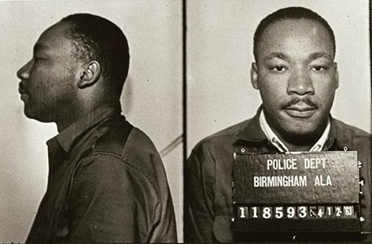
I wonder if you know who this man is? His name was Rev Dr Martin Luther King, Jr. The word ‘Reverend’ means he was a pastor, or a minister. ‘Dr’ means that he went and studied even longer than most people do, because he was very smart and he loved learning about God. I wonder if you know what he did? Rev Dr Martin Luther King, Jr, worked with other people to try and make the United States treat people equally, no matter the colour of their skin. He was a good man, wasn’t he?
Even if you knew who he was, I wonder if you knew that he went to gaol? We usually think of gaol as a place for people who do bad things. People generally go to gaol when they break the law, but some bad things are not against the law, and sometimes doing what’s right can mean not following the law. That’s what happened to Rev Dr Martin Luther King, Jr who was arrested for leading a march without a permit and violating a state court injunction that banned civil rights demonstrations.
Jesus talked all the time about doing the right thing, no matter what the law does or doesn’t say. In a Bible story we will hear later today, Jesus had to choose whether he would follow the law or do what is right.
On 1 February, 1960, four young African American students from North Carolina, staged a sit-in at Woolworth’s store in Greensboro, a popular retail store that was well known for refusing to serve lunch to those who weren’t white. Their names were David, Franklin, Ezell and Joe, and they were inspired by Rev Dr Martin King, Jr, who said ‘we must meet hate with love’. So, they decided to sit at a lunch counter every day until they were served. It was a simple plan – asked to be served and when this service was denied, just stay in your seat. They would repeat this process every day for as long as it would take. They sat there every day until 25 July, 1960 … that’s 5 months, 3 weeks and 3 days. Even though people shouted at them and threw drinks at them, they just sat peacefully. On 25 July, 1960, four black employees of Woolworth, Geneva Tisdale, Susie Morrison, Anetha Jones, and Charles Bess, were invited by the store manager to change out of their work clothes and order a meal at the counter. That ended the segregation in this store, and as the sit-in movement spread, in many other places. Interestingly, the former Woolworth‘s store in Greensboro now houses the International Civil Rights Centre and Museum.
Let’s pray …
Dear God,
You have made all people and you love all people. Help us to always do the right thing, and act in ways that bring about justice for everyone.
Amen.
We Sing: Help us accept each other – (TiS 648)
Help us accept each other as Christ accepted us;
teach us as sister, brother, each person to embrace.
Be present, Lord, among us and bring us to believe
we are ourselves accepted and meant to love and live.
Lord, for today’s encounters with all who are in need,
who hunger for acceptance, for righteousness and bread,
we need new eyes for seeing, new hands for holding on:
renew us with your Spirit; Lord, free us, make us one!
Bible Reading: John 8:2-11
2 Early in the morning he came again to the temple. All the people came to him, and he sat down and began to teach them. 3 The scribes and the Pharisees brought a woman who had been caught in adultery, and, making her stand before all of them, 4 they said to him, “Teacher, this woman was caught in the very act of committing adultery. 5 Now in the law Moses commanded us to stone such women. Now what do you say?” 6 They said this to test him, so that they might have some charge to bring against him. Jesus bent down and wrote with his finger on the ground. 7 When they kept on questioning him, he straightened up and said to them, “Let anyone among you who is without sin be the first to throw a stone at her.” 8 And once again he bent down and wrote on the ground. 9 When they heard it, they went away, one by one, beginning with the elders, and Jesus was left alone with the woman standing before him. 10 Jesus straightened up and said to her, “Woman, where are they? Has no one condemned you?” 11 She said, “No one, sir.” And Jesus said, “Neither do I condemn you. Go your way, and from now on do not sin again.”
Bible Reading: Matthew 23:23
33 “Woe to you, scribes and Pharisees, hypocrites! For you tithe mint, dill, and cumin and have neglected the weightier matters of the law: justice and mercy and faith. It is these you ought to have practiced without neglecting the others.
Reflection:
They were ready to stone me.
Why would he want to save me – even if he could?
They had the law on their side.
Why would he break it – even if he dared?
They put to him an impossible question –
any answer would catch him out.
Why would he outwit them, even if he knew how?
They used me to bring him down but he brought himself down.
Without a word, without an answer, without an escape,
down he stooped on his knees in the dirt,
stretching out a hand, trailing a finger through the dusty sand.
His head bowed, his bank bent, his arm moving slowly, making lines …
They kept on badgering him, goading him into tripping himself up.
But without a stumble, he stood up straight and made clear his line in the sand.
‘Stone her then, whoever is without sin.’
Bending down once more, trailing fingers, eyes lowered, arms outstretched.
Silence. Slowly, shuffling footsteps. Accusers departing. No-one left to condemn me.
‘Go well now’, he said to be, ‘be without sin.’
What a way to save a life.
As we continue with our series Tell me something good, we are also moving closer to Holy Week. Step by step we are walking towards the time of Jesus’ arrest, trial and death on the cross. As he walked this path, Jesus’ ministry was becoming increasingly at odds with the religious leaders, particularly with those who prioritised loyalty to legality, and saw Jesus and his teachings as a threat. While Jesus is teaching in the Temple, some scribes and Pharisees interrupt him, trying to put Jesus – and a woman caught in adultery – on trial. Their questioning intensifies as they cite Mosaic Law and put the woman’s fate in Jesus’ hands. Instead of focusing on punishment, Jesus turns things on their head, inviting each person to consider their own sin. Jesus defuses the spectacle by condemning no one.
As we consider this story, I’d like to point out a couple of things that I think are worth noting. Firstly, while Jesus is defying the legalism of the scribes and Pharisees in this particular encounter, we need to remember that not all Jewish law is inherently legalistic or rigid. In fact Judaism has a rich history of holding Written and Oral Torah together to interpret and reevaluate the law. As a Jew himself, Jesus’ teachings were grounded in his understanding of the Torah; however many of his actions reinterpreted the law. He was, in effect, a Jewish Rabbi engaging with other Jewish leaders around points of faith. This is also reflected in the verse from Matthew 23, where Jesus is preaching to the crowds and disciples, denouncing the hypocrisy of those who forget that justice, mercy and faith are the weightier precepts of the law.
The fact that Jesus’ chooses to write in the dust shows that he is upholding the laws of the Sabbath. According to scholars, writing in ink was forbidden on the Sabbath because it was work that had a lasting mark. Jesus’ choice to write in the dust shows that he understand the Sabbath law and knows how to keep it, even the smallest requirements.
Secondly, the traditional teaching of this story often implies that while the religious leaders shouldn’t have tried to set Jesus up, the woman is still guilty of doing bad things. In fact, the story is often entitled the ‘woman caught in adultery’. This places judgement on the woman who stands accused. Yet there is no mention of her husband, no details of her transgression and her co-accused doesn’t appear to be there. Could she have been raped or threatened? Was it her co-accused who has dobbed her in for some clemency? She does not admit anything, nor is she allowed to defend herself. When the drama is over and Jesus’ tells her to go and not sin again, I wonder whether as well as encouraging her to live well, he is also advising her to take care around the religious elite who have already decided that she is just collateral damage.
As I read this passage again, it seems to me that the whole thing is a set-up, a set-up to trap Jesus’ because those with the power and authority feel threatened. In the temple where this encounter unfolds there is an audience – a Roman patrol who would have been keeping an eye out for any unrest, the religious leaders who are challenging Jesus, the terrified woman, and the gathered crowd. The religious leaders are sure they have Jesus trapped because any response he gives will mean he can’t win. To quote Amy Jill-Levine, ‘The story itself is not technically about forgiveness. It is about legal procedure … Were Jesus to say ‘go ahead and stone her,’ they could accuse him of violating Torah because of the lack of witnesses and so an incomplete legal process. They could accuse him of lacking mercy. A verdict of death could also prompt the charge of sedition since, according to John 18:31, Rome had forbidden locals the right of capital punishment.’[1]
The accused woman witnesses firsthand Jesus’ simple but effective manner of de-escalating the situation. While questions are being thrown at him, he slows down the panic and passionate exchanges by bending down and writing in the dust. I wonder how it must have felt for the woman to have the enclosed space of enforced judgement by others, and the imposition of shame, stripped away as that shame is distributed amongst all of those gathered, rather than focused on a single person? I wonder how it must have felt for her accusers as Jesus moves the focus to them … ‘Let anyone among you who is without sin be the first to throw a stone at her’.
In what should have been the end of her life’s story, the woman finds herself standing as her accusers have all left. She is whole, alive and freed into a new future. Yes, Jesus’ showed her justice and mercy, but throughout this encounter, Jesus never forgot that the woman was a real person, deserving care. He saw her as so much more than a prop or a scapegoat. In his eyes, she was never just collateral damage.
God’s justice is God’s joy. God’s justice doesn’t does not align with our human metrics of justice and punishment, but delights in the lost returning home and goodness propagating even in the face of death.
I like to think of Jesus doodling on the ground while folk who were important awaited his pronouncement on the fate of the accused woman. I like to think that Jesus did not draw a straight line but a squiggly circle. A circle that made room for more and more inclusion. A circle that meandered, accommodating others. A circle that enabled the most sceptical and the least likely to find a way in.
Let our doodling always be as inclusive. When we draw a line, may we not discover that Jesus is on the other side of it. May the good news we bring be embedded in justice, mercy and faithfulness.
Amen.
We Sing: There’s a wideness in God’s mercy – (TiS 136)
There’s a wideness in God’s mercy like the wideness of the sea,
there’s a kindness in his justice which is more than liberty.
For the love of God is broader than the measures of our mind;
and the heart of the Eternal is most wonderfully kind.
If our love were but more simple we should take him at his word;
and our lives would be illumined by the love of Christ our Lord.

Prayer for Others (shared by Liz Pace):
Loving God, you know all of us.
You know our fears and our dreams, our hopes and our longings, our grief and our joy.
You know the words that are on our tongue before we can even say them, so today we come to you unfiltered.
Today, we bring you our full honesty, trusting that you meet us here with grace and love.
Holy God, we admit that mercy, justice, and faithfulness often get tangled up in our minds.
We want to do the right thing, which feels like justice.
However, sometimes we go about justice with a blunt sword, failing to practice mercy.
We want to be merciful, but our anger and hurt can get in the way.
Too often, we find ourselves casting stones.
We want to be righteous, but we often forget that righteousness must impact our relationships, not only our words or our actions.
God, we admit that mercy, justice, and faithfulness often get tangled up in our minds.
So like Jesus did with the crowds that day, help us to root ourselves in the best of these practices.
Untangle these threads of our faith and show us how to hold them all.
Spark a fire in our hearts for justice—
justice for the oppressed, justice for the overlooked,
justice for our neighbours, justice for those not given a voice.
Spark a fire in our hearts for mercy—
mercy for the sinful, which is all of us, mercy for the hurt,
mercy for the ones who are doing their best with what they have.
And spark a fire in our hearts for righteousness.
Call us up to a higher moral ground.
Remind us that our faith invites us to love as you love, and to forgive as you forgive.
Show us how to put down our stones.
Show us how to forgive ourselves for our own wrong.
Show us how to empathize with the other, putting ourselves in their shoes.
If we can do that, then maybe there will be a day when there is less stone throwing, less mob building, less violence toward our neighbour.
Maybe there will be a day when all can gather at the table.
Maybe there will be a day when we can all break bread together.
Maybe there will be a day when justice, mercy, and righteousness feel like a mighty flowing stream.
Until that day, we will continue to look for your words in the dirt.
We will continue to listen for your deep truth.
Until that promised day, we will continue to bring you our unfiltered honesty.
Until that promised day, we will continue to pray for our neighbour.
Today, in a moment of silence, we pray for those who are on our hearts. (Time of silence)
Loving God, set a fire in our hearts for justice, mercy, and righteousness.
And as you do, we will join our voices together to pray the words your son taught us to pray, saying …
Our Father in heaven, hallowed be your name;
Your kingdom come, your will be done on earth as it is in heaven.
Give us this day our daily bread and forgive us our sins
as we forgive those who sin against us.
Save us from the time of trial and deliver us from evil.
For the Kingdom, the power, and the glory are yours now and forever.
Amen.
We Sing: Amazing Grace – (TiS 129)
Amazing grace (how sweet the sound) that saved a wretch like me!
I once was lost, but now am found, was blind, but now I see.
As grace first taught my heart to fear so grace my fears relieved;
how precious did that grace appear the hour I first believed.
Through many dangers, toils and snares I have already come:
God’s grace has brought me safe thus far, and grace will lead me home.
The Lord has promised good to me, his word my hope secures;
he will my shield and portion be as long as life endures.
Blessing and Sending:
As you leave this place,
when you meet anger, speak with love.
When you meet fear, speak with hope.
When you meet pain, speak with gentleness.
But no matter what, speak this good news.
For the good news of the gospel is love and justice for all.
It is joy that surprises, and nonviolence that transforms.
The good news of the gospel is alive in the world,
so go forth speaking.
For if you won’t, then who will?
And the blessing of God the Father,
God the Son and God the Spirit,
the One God who is Mother to us all,
go with you today and always.
Amen.

Thanks to all those who have assisted in preparation for this liturgy with encouragement, prayers and conversation. I have also utilised the following resources: Fig Tree Worship, Spill the Beans (Issue 46) and Sanctified Art (Tell me something good).
[1] Jesus for Everyone: Not Just Christians, by Amy-Jill Levine, (New York, NY: HarperCollins Publishers, 2024). 245.