

Koonung Heights Uniting Church
Genesis 24:34-38,42-49, 58-67
I recall the time when I first realised the book of Genesis (aside from the primeval history of the first 11 chapters) is about only one family. One family – Abraham and Sarah and the next 3 generations. And that made things much more simple. Genesis is best thought of as a sprawling multi-generational epic about one frequently dysfunctional family and the God who despite their flaws and betrayals uses them in the unfolding drama of covenant and salvation history. It would make a great TV series. The good news … if God could use even this lot then there is hope for each of us! It is played out through land, descendants and the promise of “a blessing so you may become a blessing to all nations”. That is the the book of Genesis. But as the world is only too aware it is all very problematic when we consider this in light of contemporary events in the Middle East.
Our lectionary going back to May 31 gives us readings from Genesis for 12 consecutive weeks. Obviously a foundational story, that perhaps we don’t know all that well, so lets do something of a deep dive for a few weeks at least into this familychosenby God – Abraham and Sarah, and their offspring – for no good reason other than that is the way God chose to do it.
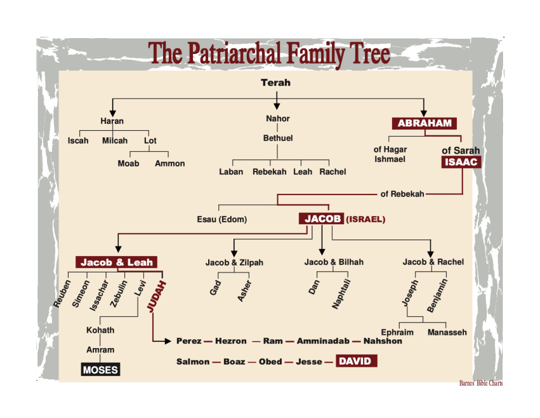
We of course have missed the first few weeks but I imagine Abram and Sarai as they were then had no idea that their packing up the household and moving was going to be a world shaping event. Yet today half of the world’s population hold them to be revered figures.
For Jews – we are reading from Hebrew scriptures
For Christians. Abraham appears in the very first verse of the Christian sacred writing – Matt 1:1 “An account of the genealogy of Jesus the Messiah, the son of David, the son of Abraham” (Mt. 1:1).
As Paul shares in his Galatian letter, if we “belong to Christ then [we] are Abraham’s offspring, heirs according to the promise”
And Moslems also revere Abraham as a great prophet and father in the faith. He is mentioned numerous times in the Quran. They who trace their heritage not through Isaac but his other son, Ishmael, the son of Abraham who was born, not to Sarah but to the servant woman, Hagar. The Quran specifically honors him with the title Khalil-Allah, meaning “Friend of God”.
Sometimes the centrality of Abraham is reflected in the expression “Abrahamic faiths” . Monotheistic faiths. And to remind us all this is not ancient religious history we have the Abraham Accords, US sponsored trade and diplomatic agreements between Israel and various Muslim countries, signed initially in 2020. So the tragedy of the current war between Israel, Iran, USA is it is a family dispute/war. Abraham and Sarah’s children literally tearing each other apart.
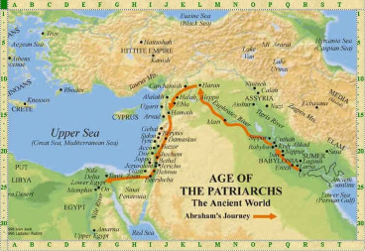
It’s at Haran that God appears to Abram and gives him a commission: “Go from your country . . . to the land that I will show you” (Gen. 12:1). God doesn’t give Abram a destination. God just says, gather up your family and get on the road. I’ll let you know when you get there!
The story that lies before us today takes place after the death of Sarah. Abraham is still living, but he wants to make sure that the promise of descendants continues. He also wants to honor Sarah’s request that Isaac not marry one of the Canaanite women living in the neighborhood. Instead, Sarah wanted Isaac to take a wife from among their own kinship group. Abraham sends a servant to the house of his nephew Bethuel, son of his brother Nahor, with instructions to bring home a wife for Isaac. The story is told through the perspective of the servant, which adds another interesting layer to the story. So what we have just been told is that Isaac and Rebekah are cousins. I had the rather embarrassing experience when I was at Brunswick and somehow the topic of marrying your cousin came up and I exclaimed boldly, forthrightly and quite mistakenly, “Oh gross! You can’t marry your cousin!”. Only to be quietly told by one of the stalwart couples of the church who were attending the meeting, “We are cousins”.
Having fended off the threat of the covenant not even making it to the first generation (with the birth of Isaac) the same issue again confronts this family… every generation must actively participate in the renewing and living out of the promises of God. No individual or generation can rest on the work or the faithfulness of the previous generation.
Land and offspring is what it is all about. And still today – will young couples planning for a family (offspring) ponder if they ever be able to buy a home (land). And land and families are messy, the source of countless squabbles, wars, resentments that endure for generations – the original squabble about land and descendants dating back to this family is still being played out today as Israel and Palestine do battle. Sad and shameful… covenant is the source of so much division
It also occurred to me during the preparation for this sermon that land and offspring feature prominently in weekly Acknowledgement of country. The unceded country upon which countless generations lived and now we also pay our respects to elders, past, present and emerging… So the point here is that far from retelling crusty old ancient tired and irrelevant stories we are telling particular stories that contain within them universal themes and truths.
Even before the servant concluded his prayer, Rebekah came along, giving not only water to him but also to all his camels. How do you know if something is God’s will? Here it seems it is not so much what we call miraculous events, but it is the everyday acts of generosity, compassion, for the servant looks at these ordinary events with eyes of faith when he professes that God has led him by the right way to accomplish his employer’s charge to him. e.
The family members adopt this perspective that “The thing comes from the LORD” (Gen. 24:50), so they will do “as the LORD has spoken” (Gen. 24:51).
Then there is the role that Rebekah plays in this narrative. This young woman is portrayed in a few lines as a courageous, independent woman. When her family seeks to delay her departure, and the servant insists that they leave sooner, Rebekah is called in and asked her opinion that would settle the matter, suggesting a remarkable instance of female agency in the patriarchal context of the biblical traditions. I am not going to pretend this is anything but a story of males engaged in transactions concerning a female, but it does have this interesting line about Rebekah being involved in her own future.
And so this is also a story involving marriage. Marriage is now widely perceived as a capstone rather than a foundation. Think about the difference between a capstone in a building, the very last stone to go on an arch or tower, often elaborate and ornate versus a foundation, on which the whole building is built.
Many couples today view marriage as a point they have arrived at, an achievement if you like. It comes after years of trying it out, living together, sometimes involving purchase of house (?), maybe children, or maybe they are now ready for children. Getting married is a celebration of a life created together. The wedding itself is something of a celebratory party. An acknowledgement of what has been achieved, as well as what is expected to continue. The final placement of the capstone. Contrast this with even in my lifetime the previous view of marriage as the foundation or establishment of the basis upon which a life, a relationship will be established. Foundation.
While we may define “family” in a different way than much of the Biblical stories it remains true that our most formative experiences occur in our family. Children are brought to maturity, self awareness in their family or families. I know here at Kooning Heights you are committed to that including an opportunity to learn of the Christian gospel of Jesus Christ.
Rebekah’s decision to move away from her family and her land, to marry a man upon whom she has never set eyes, parallels the courageous actions of Abraham leaving all that is known to depart on a journey into an unknown future, accompanied only by the generous promises of God. We love that language in the UCA. A pilgrim people, always on the move, we have no permanent city here but seek the eternal city to come.
This is a story about traveling and hospitality, about meeting strangers who become family, and about taking risks and leaving home in order to find a home. It is a story that testifies to the power of love that comforts and heals grief. Most of all, it is a story of faith journeys with paths that providentially cross.