

Kooning Heights Uniting Church
July 12, 2026
Genesis 25:19 – 34 Esau and Jacob
Last week we began our series on the book of Genesis. God calls Abraham into covenant and made the promise of descendants and calls the nation to faithfulness. The rest of Genesis unfolds telling the dramatic story of this family, this nation. It begins with Abram and Sarai being called to leave all behind. Just the summons to up and go – no destination, just go and the Lord will tell you when you are there.
Who has up and left their country of birth?
In this particular story of this one extended family, a universal story is playing out. In summary of our series: 1/ The blessings upon these individuals is given for a blessing upon all – 2/ yet too often the morality of many people in these stories does not line up neatly with how we would expect wholesome Christian families to act. Yet God continues to act faithfully. Third, Its all about covenant – have more to say in a while but covenant is played out mainly through the two realities of land and offspring. Implications still being played out today in the Middle East.
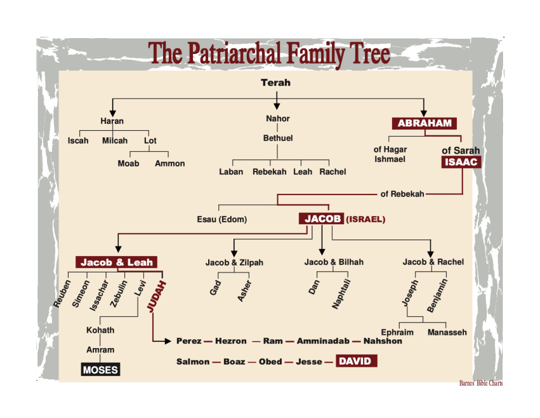
Last week we did not put a date on these events. Its not like we can put precise timelines, it will always be around, about, approximately – but when the topic of when Abraham left Haran comes up at your next dinner party if you said about 2000 BCE you won’t embarrass yourself.
The story is at times murky – many families have what is sometimes called “skeletons in the closet” – things that aren’t talked about in polite company. Abraham fathered at least eight sons by three women. We know of Ishmael and his mother, the Egyptian slave Hagar. Then there’s Isaac who was born to Sarah.
So who is the third wife?
25 Abraham took another wife, whose name was Keturah. 2 She bore him Zimran, Jokshan, Medan, Midian, Ishbak, and Shuah.
How often we see people written out of history. Often women. Keturah’s family story screeches to an abrupt halt. One modern commentator on the Hebrew Bible has called Keturah “the most ignored significant person in the Torah“.
The covenant relationship splutters along, stalls, nearly careers off the rails due to the rather awkward lack of descendants a couple of times. In fact today we read that, Rebekah was “barren” what a ugly cold word. And we spare a thought for all couples that have found it difficult to conceive, or had miscarriages or still borns.
Having dealt with Abraham and Sara and the wondrous birth of Isaac today we leap over that generation of Isaac and Rebekah and are already onto the commencement of the next generation of Esau and Jacob. Rereading this story it occurs to me again how small a part Isaac plays in the book of Genesis. This long awaited man appears and then quickly passes through the story before it settles on the twins- particularly Jacob who came to be known as Israel.
It is more than a bit of a relief that God can use broken, stumbling, less than squeaky clean individuals and families. We no longer have to pretend we or our families have got it all together.
One of the more negative images Christians seem to have projected in the wider community is of being self righteous, judgemental, holier than thou, in a way that does not attract people who knew only full well they are struggling, that they do not measure up to those standards, and therefore fear if I was to show my face I would not be accepted, or at least not until I have changed and smartened up. Its like some churches have a big container like a giant umbrella rack at the front entrance saying leave all your frustration, shortcomings, failures, here and you can collect them on your way out but we don’t want them in our worship service.
Most feedback I have ever got on one of my sermons was the day I had to confess at the start of the sermon how I felt very conflicted. Because there I was standing up in front of 100 people about to deliver the word of the Lord (hopefully!) but I was a ball of anguish inside. Why? Because in the manse that morning there had been raised voices, angry words, possibly even a smack or two delivered to the children that morning. I was not the serene, got his act together person I was pretending to be at that moment and it ate me up. I can’t remember exactly what had happened. I do get a bit tense on Sunday mornings, probably even more so in the early ministerial days. And the kids were little, probably dawdled getting dressed, spilled food on their SS clothes, Who knows now, but I do remember the feeling of shame, hypocrisy, so I let it out, worried that people may think less of me, and the reverse happened. Never have I had so many people come up to and confess that they too felt the same. One said, just last week my wife and I had an argument in the car on the way to church, but we got out and pretended all was well. Why do we do this to ourselves and to each other? Not to say we are not committed to growing, improving, striving… but we are all a work in progress. God is not shut out by our brokenness, unfaithfulness, waywardness. God can work with it and through it.
Parents sometimes can hardly believe they have children who turn out so differently. How can it be two or three or maybe even four people have the same parents and got raised in same home – and turned out so different. So it is with today’s twins. Any twins here? The babies born to Isaac and Rebekah are twins but everything about Esau and Jacob is contrasted. As the twins are born Jacob grips the heel of Esau, foreshadowing his desire to grasp what belongs to his brother. From then on they are contrasted at every point: one is red and hairy, the other not; one becomes a hunter, the other a ‘quiet man’; one an outdoors type, the other more fond of indoors. Esau is impetuous and strong willed, Jacob more reflective and thoughtful. Even the love of their parents is divided between them (v. 28). The intriguing little tale of how Jacob took advantage of Esau’s hunger to get him to give up his birthright, the portion of inheritance belonging to the oldest child (vv. 29-34), heightens the divisions. Esau despises what is a privilege and coveted by Jacob.
Let me use the Esau/Jacob story as a stepping off point for a reflection on opposites. This way of dividing things up is sometimes called Binar. Binary thinking is dualistic, it is judgemental, unimaginative, stunted, fearful of complexity. People and situations are good or bad, in or out, right or wrong, black or white, us and them, familiar or unfamiliar. Sometimes, say in a medical emergency a battle we need this clearcut way of operating. But to be using this in most of our lives which are far more relational it is going to open us up to massive blind spots, where we just can’t see the totality of a person or situation. It is what Rebekah felt in her womb and it was never going to play out well with her two sons who represent a binary view of the world.
Sometimes we even do it to ourselves, despising one part of our nature and driving it underground or casting it out from us. When we are able to hold our own opposites in tension we can ask different questions and open ourselves to new possibilities. We will have more compassion and understanding for the contradictions in the lives of others. For these reasons the UCA changed to a consensus decision making model quite a few years ago.
We eliminated the Winner and Losers mentality at our meetings where one bloc can outvote the other and decided we would listen to each other and seek the greatest wisdom available, even if it meant no-one got everything they wanted.
What would it be like, and take, to name the opposites in your life today? To hold them without having to resolve them? To listen to and learn from them?
The task of the growing Christian is to learn to hold the opposites in tension with each other and give both sides of ourselves and others equal time, attention, energy, and even value.
The story of Esau and Jacob shows us that God’s way in the world will very often have something to do with inverting the normal pattern of prestige. Jacob on more than one occasion was a cheat and a fraudster. Jacob is a schemer, he is good at tricking and manipulating situations and people. He can almost get people to say whatever he wants them to say by being smart with words. He is a type, the trickster. Or rascal.
Embarrassingly he also happens to be God’s chosen instrument.
All this sets the scene for the reversal in relations these two brothers experience. This is prefigured in Yahweh’s speech to Rebekah – the elder, Esau, will serve the younger Jacob (25:23). Jacob will inherit the things due to his older twin, and for those who know the continuance of this saga they will recollect Joseph will later ascend over his older brothers which also became a sore point for them. The way Yahweh will work out his promise will not be in accord with human power, political, social or religious assumptions. David the little shepherd boy is not even considered as a possible candidate for king, but is anointed as the great future leader. The widow’s mite – that is the smallest offering – is upheld by Jesus as the greater gift because the woman gave in her scarcity not her abundance.
All this of course is a major theme when Jesus came preaching. He said things like, The first will be last and the last first; a child will lead the godly into the Kingdom and you must become as a child, the poor and sinful will enter the Kingdom ahead of many who think of themselves righteous, God uses what is despised and foolish in human eyes, even, and supremely, an outcast dying on a cross.
So God can use you and me.