

Koonung Heights Uniting Church
Service of Worship at Home
Pentecost 23 – 5 November 2023 – 10am or whenever possible
You may like to light a candle during your time of worship.
Feel free to text the Peace to other members of the congregation.
Introit: “As the deer” (TiS 703 – words below)
As the deer pants for the water, so my soul longs after you.
You alone are my heart’s desire and I long to worship you.
You alone are my strength, my shield, to you alone may my spirit yield.
You alone are my heart’s desire and I long to worship you.

Candle Lighting:
As we gather for worship today
we light the Christ candle.
This candle reminds us that Christ is with us,
and that we have the gift of his peace.
May the light symbolised in this small candle,
overwhelm us and the world.
Acknowledgement of Country:
This morning I would like to acknowledge
the Wurundjeri WoiWurrung People of the Kulin nations,
traditional custodians of this land.
I pay my respects to elders past and present,
and to all future generations and leaders.
As First and Second Peoples walking together,
may we commit ourselves
to be people of the covenant;
listening, truth telling and seeking justice for all.
Call to Worship:
This is holy ground
and we are most alive here.
It is a place of peace
where different sides tangle together.
This is holy ground,
our most honest faith is stirred here:
a place where we honour each other
and celebrate our differences.
This is holy ground,
our deepest love is shared here:
a place where all that reduces life
is folded away.
This is holy ground
and here we worship the holy One.
We Sing: “You are holy” – (TiS 753 – words below)
You are holy, you are whole.
You are always evermore than we ever understand.
You are always at hand.
Blessed are you coming near; blessed are you coming here
to your church in wine and bread, raised from soil, raised from dead.
You are holy, you are wholeness, you are present, let the cosmos praise you, Lord!
Hallelujah, hallelujah, hallelujah, hallelujah, our Lord!
Prayer of Adoration and Confession:
Creator God,
thank you for the rhythms of creation,
for the new-life season
the lengthening days
and the time to gather in worship.
Our worship has seasons too,
and we treasure these days
while we also anticipate the season of Advent.
We are grateful for the opportunities we have
to set aside time to spend with You.
We approach you in anticipation
as we gather to pray, praise, read scripture
and fellowship with others as we worship.
We come before you God,
submissive and humble,
as Abagail appealed to David,
but also with confident bravery.
We also come to you quietly,
as Apphia appears in Paul’s letters,
confident that you will hear our prayers
asking for forgiveness.
You alone hear our innermost thoughts
and know when we have fallen away.
We are sorry for all we miss –
missed opportunities,
mistaken assumptions,
miserable responses to people we meet.
We come to you today
repenting what we have left undone
as well as apologising
for our mis-steps and wrong turns.
We ask for courage, for confidence,
for compassion and for character
to follow Christ’s example,
and the strength to keep your commandments,
loving one another as Christ loved us,
in whose name we bring these prayers.
Amen.
Words of Assurance:
No matter our mis-steps or wrong turns,
God is always with us.
We are never alone,
and can place our trust in God,
for God will not fail us.
This is good news
thanks be to God.
A Time for All:
If I ask you to think of a ‘peace-maker’ what image comes to mind? In the Beatitudes, Jesus says that the peacemakers are blessed and will be called children of God. Does that reconcile with the image you have? Peace-makers are defined as individuals and organisations involved in peacemaking, often in countries affected by war, violent conflict and political instability. They engage in processes such as negotiation, mediation, conciliation and arbitration drawing on international law and norms and they work to move violent conflict into non-violent dialogue. In one of our readings today we will hear some of Abigail’s story. Abigail was a peace-maker.
With all that has been going on in the world I have been thinking a little about peace and peace-makers. In my searching I came across a beautiful children’s book called Peace is an Offering written by Annette LeBox with pictures by Stephanie Graegin. I’d like to share some of it with you now …
Peace is an offering – a muffin or a peach.
A birthday invitation, a trip to the beach.
Peace is gratitude for simple things –
light through a leaf, a dragonfly’s wings.
A kiss on the cheek, raindrops and dew,
a walk in the park, a bowl of hot stew.
Peace is holding onto another.
Peace is the words you say to a brother.
‘Will you stay with me? Will you be my friend?
Will you listen to my story till the very end?
Will you wait when I’m slow? Will you calm my fears?
Will you sing to the sun to dry my tears?
Will you keep me company when I’m all alone?
Will you give me shelter when I’ve lost my home?
You might find peace in a photograph or the deep boom of a belly laugh.
And even in the wake of tragedy. Even then, you might find her.
In the rubble of a fallen tower. In the sorrow of your darkest hour.
In the hat of a hero. In the loss of a friend.
Peace is a joining, not a pulling apart. It’s the courage to bear a wounded heart.
It’s a safe place to live, it’s the freedom from fear.
It’s a kiss or a hug when you’ve lost someone dear.
So offer a cookie, walk away from a fight. Comfort a friend through the long, dark night.
Sing a quiet song. Catch a falling star. May peace walk beside you wherever you are.
May each one of us do what we can, in our own small way, to bring peace.
We Sing: “Make me a channel of your peace” – (TiS 607 – words below)
Make me a channel of your peace. Where there is hatred let me bring your love;
where there is injury, your pardon, Lord; and where there’s doubt true faith in you.
O Master, grant that I may never seek – so much to be consoled as to console,
to be understood as to understand, to be loved, as to love with all my soul.
Make me a channel of your peace. Where there’s despair in life, let me bring hope;
where there is darkness, let me bring your light;
and where there’s sadness, ever joy.
O Master, grant that I may never seek …
Make me a channel of your peace. It is in pardoning that we are pardoned,
in giving of ourselves that we receive, and in dying that we’re born to eternal life.
Bible Reading: 1 Samuel 25:2-3, 18-31
– David and Abigail
2 There was a man in Maon whose property was in Carmel. The man was very rich; he had three thousand sheep and a thousand goats. He was shearing his sheep in Carmel. 3 Now the name of the man was Nabal, and the name of his wife was Abigail. The woman was clever and beautiful, but the man was surly and mean; he was a Calebite.
18 Then Abigail hurried and took two hundred loaves, two skins of wine, five sheep ready dressed, five measures of parched grain, one hundred clusters of raisins, and two hundred cakes of figs. She loaded them on donkeys 19 and said to her young men, “Go on ahead of me; I am coming after you.” But she did not tell her husband Nabal. 20 As she rode on the donkey and came down under cover of the mountain, David and his men came down toward her, and she met them. 21 Now David had said, “Surely it was in vain that I protected all that this fellow has in the wilderness, so that nothing was missed of all that belonged to him, but he has returned me evil for good. 22 God do so to David and more also if by morning I leave so much as one male of all who belong to him.”
23 When Abigail saw David, she hurried and dismounted from the donkey and fell before David on her face, bowing to the ground. 24 She fell at his feet and said, “Upon me alone, my lord, be the guilt; please let your servant speak in your ears and hear the words of your servant. 25 My lord, do not take seriously this ill-natured fellow, Nabal, for as his name is, so is he; Nabal is his name, and folly is with him, but I, your servant, did not see the young men of my lord, whom you sent.
26 “Now then, my lord, as the Lord lives and as you yourself live, since the Lord has restrained you from bloodguilt and from taking vengeance with your own hand, now let your enemies and those who seek to do evil to my lord be like Nabal. 27 And now let this present that your servant has brought to my lord be given to the young men who follow my lord. 28 Please forgive the trespass of your servant, for the Lord will certainly make my lord a sure house, because my lord is fighting the battles of the Lord, and evil shall not be found in you so long as you live. 29 If anyone should rise up to pursue you and to seek your life, the life of my lord shall be bound in the bundle of the living under the care of the Lord your God, but the lives of your enemies he shall sling out as from the hollow of a sling. 30 When the Lord has done to my lord according to all the good that he has spoken concerning you and has appointed you prince over Israel, 31 my lord shall have no cause of grief or pangs of conscience for having shed blood without cause or for having saved himself. And when the Lord has dealt well with my lord, then remember your servant.”
Bible Reading: Philemon 1-7
Salutation
1 Paul, a prisoner of Christ Jesus, and Timothy our brother,
To our beloved coworker Philemon, 2 to our sister Apphia, to our fellow soldier Archippus, and to the church in your house: 3 Grace to you and peace from God our Father and the Lord Jesus Christ.
Philemon’s Love and Faith
4 I thank my God always when I mention you in my prayers, 5 because I hear of your love for all the saints and your faith toward the Lord Jesus. 6 I pray that the partnership of your faith may become effective as you comprehend all the good that we share in Christ. 7 I have indeed received much joy and encouragement from your love, because the hearts of the saints have been refreshed through you, my brother.
Reflection:
I’m not sure how many of you might have read Tolkien’s “The Fellowship of the Ring”, the first book in the “Lord of the Rings” trilogy, but one particular scene from that book came to mind when I was thinking about the story of Abigail this week. There is a gloriously ominous and quite humorous moment where the wizard Gandalf the Grey exasperatedly utters the epithet “Fool of a Took!” after Peregrin Took knocks a skeleton, still dressed in armour, into a well. This foolish and noisy act unleashes the goblins. Peregrin Took simply wasn’t thinking, and his foolish action puts the whole company at risk, much like Nabal’s foolish action risks the lives of many. It is Nabal’s wife Abigail who saves the day. She is a female peace-maker and the one who steps up – standing between two groups of people who want to do violence to each other.
When Abigail first appears, the author says that she is clever, an unusual description for a woman; yet the text also says that she is beautiful which is more in keeping with the way women are described in the Hebrew Scriptures (or what we sometimes call the Old Testament). This description of Abigail is one that contrasts her with her husband, Nabal, who is described as ‘surly and mean’. In fact the name Nabal is a Hebrew word which means “fool.” Now I doubt that Nabal’s parents actually named him that, and think it is far more likely that he is given this name because of his repeated foolish actions or to illustrate a point. In contrast to the fool Nabal, Abigail is portrayed as intelligent and discerning – so much more than her physical appearance. She is a leader, a diplomat, a trickster and a peace-maker. We clearly see Abigail act in this way, but why is it necessary? Let me fill in the gaps.
You might remember a couple of weeks ago we heard about David running for his life. His wife, Michal, told him to flee and helped cover his tracks by putting a statue in his bed and disguising it. David is still out in the wilderness, but he is not alone. He and his men are acting as protectors for the people who live outside the city walls. There is no paid police force to ensure safe travel, so David and his men protect farmers and shepherds from raids by thieves. Nabal’s land is one of the places that David and his men have protected, so David sends ten young men to Nabal seeking a gift from him as a thanks for the protection he has given Nabal’s men previously. It is a festive time, a time for generosity, or so David expects. The scale of the gift is big – indeed it could even tip over into a kind extortion akin to the mafia’s protection rackets: I looked after you (I did not murder your men) so you look after me. Alas for Nabal, the offer to make a gift is refused by him. When word gets back to David, he gathers four hundred men to unleash vengeance upon Nabal’s household.
Abigail, unlike her husband, recognises an offer you cannot refuse, and steps in as soon as she hears from Nabal’s servants about the faux pas he has committed. They know to go to her and it becomes clear that Abigail is a leader when they trust that Abigail is the one who will understand the scope of the problem and come up with a solution, which she does. She rides to meet David with donkeys laden with gifts and falls at his feet to seek a way out of the desperate situation into which her husband had placed the whole family. She is everything that her husband was not. She is eloquent and considerate, she refers to herself as David’s servant, and offers the gifts herself for David’s young men.
But we know a little about David too, and so it seems, does Abigail. She knows that just sending the gifts would not be enough. She had to go herself, a woman David would notice and stop to admire … for she was beautiful. Abigail was also clever. She uses the opportunity that is opened up to denounce the foolishness of her husband, and then to lead David on a journey through the perils of a bloodguilt that actions of vengeance would bring, actions that would imperil his own journey to the throne. In over-reaction to a foolish man, David was in danger of shedding much innocent blood.
Abigail lays it on thick, expertly, preaching to David about his calling by God, and alluding to his past greatness in defeating Goliath: ‘the lives of your enemies [the Lord] shall sling out as from the hollow of a sling’ (v29). These are prophetic words that Abigail uses. She deploys diplomacy and wisdom, insight and a canny understanding of human nature. She puts herself in harm’s way between two groups of men whose stubbornness and foolishness might have resulted in horrific bloodshed, and in doing so she brings peace.
For David, this event happens in the time before Nathan becomes his adviser. Into that vacuum steps Abigail to fill the gap and ensure David does not make a catastrophic mistake. David listens and understands. He blesses Abigail for her good sense and sends her on her way back home having granted to her the petition she brought (for he was already taking on the role of king). Of course, he also takes all the gifts she brought!
What Abigail does is quite remarkable. She actively steps into a place of danger and brokers peace for a community under threat, no doubt preventing casualties on both sides. In contrast, Apphia, seems to be no more than a name. This woman, named as ‘sister’ in the opening of Paul’s letter to Philemon, is a prominent figure within the church. She is the only woman Paul ever greets in a letter, and would not be named in the greeting if she wasn’t important in her own right and in the community. It may be that she is leader of the house-church, or partner in a missionary team who are leading the church. Naming Apphia also suggests that she is to bear witness to what Paul will go on to ask of Philemon.
It is fair to say that I am speculating here, but as a prominent figure in the church, I imagine that Apphia was a woman who was faithful in prayer. She may not have brokered peace like Abigail, but I’m sure that she prayed for peace both within the church community and between the church and community beyond its doors.
Maybe we are being called to be like Abigail. Maybe our calling is to be more like Apphia. Either way, may we have the confidence to pursue Christ’s peace in our small part of the world.
Amen.
We Sing: “May the mind of Christ my Saviour” – (TiS 609 – words below)
May the mind of Christ my Saviour live in me from day to day,
by his love and power controlling all I do and say.
May the peace of God my Father rule my life in everything,
that I may be calm to comfort sick and sorrowing.
May the love of Jesus fill me as the waters fill the sea,
him exalting, self-denying, this is victory.
May I run the race before me strong and brave to face the foe,
looking only unto Jesus as I onward go.

Prayer for Others:
Loving God,
We think of our world and its people and know that there is so much to pray for.
We are troubled by the ongoing violence we see.
We think of Israeli and Palestinian civilians who are caught up the escalating violence within Gaza and Israel. We also remember those in Ukraine and Russia who continue to be caught up in a war not of their making.
We think of people in Afghanistan, Vanuatu and other places who are dealing with natural disasters, and those who now find themselves without a home.
Today we hold before you those who work proactively towards preventing or minimising disasters.
We pray for peace-keepers and humanitarian aid workers who strive to support displaced people in war-torn communities.
We pray for those involved in tsunami awareness, for those involved in food and medical aid, and for those working towards food and water security.
We pray for our nation, and within our own country we remember those who are living with the threat of bushfires. We think of those who have lost their lives and their properties.
We also pray for our First Nations sisters and brothers following the recent referendum. May we find a way to move forward together as we look to be a country where all experience justice and peace.
In particular we hold before those places and situations where honest workers seeking our national good are silenced or ridiculed by others.
We pray for those who offer humble leadership despite it seeming weak against power and greed.
We pray for our churches, for all people with the desire to follow the way of Jesus Christ.
May Christ be our courage and strength as we seek to walk a pilgrim path together.
We think of the Uniting Church and the upcoming Victorian/Tasmanian Synod meeting. May the wider church discern the Spirits leading as we move into the future.
We think of our community here at Koonung Heights, and thank you for the many people who serve in different ways in this place.
We bring before you those who know who have particular needs. Hold them close in your love.
Finally we pray for ourselves, and ask that you give us strength to continue the journey you have set before us as individuals and as a community.
We thank you for the many blessings we have, and ask you to be with us in our struggles.
May we remain confident in the knowledge that you hear, and answer, our prayers.
In Jesus name we pray, Amen.
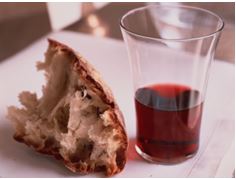
Communion:
The Peace
The peace of the Lord be with you and also with you.
Lift up your hearts. We lift them to the Lord.
Let us give thanks to the Lord our God.
It is right to give our thanks and praise.
Prayer of Thanksgiving
It is right that we give you thanks and praise at all times and in all places
for you have created and sustained us.
We praise you that through your eternal Word you brought the universe into being
and you made each one of us in your own image.
You have given us this earth to care for and delight in.
You love us and have bound yourself to us.
Above all thank you for Jesus, the living Word, born as one of us, living our common life
and walking the path to death, yet through his actions reconciling us to you
and to one another.
Therefore we gladly join our voices to the song of the Church on earth and in heaven,
singing:
Holy, holy, holy Lord, God of love and light,
heaven and earth are full of your glory.
Hosanna in the highest.
Blessed is the One who comes in the name of the Lord.
Hosanna in the highest.
On the night of Jesus betrayal and arrest, as he shared a meal with his friends,
Jesus took bread; gave thanks, broke it, and gave it to his followers, saying:
“Share this bread among you; this is my body which will be broken for justice.
Do this to remember me.”
When supper was over, he took the cup, gave thanks and gave it to his disciples, saying:
“Share this wine among you; this is my blood which will be shed for liberation.
Do this to remember me.”
Invocation
Creating, Redeeming, Sustaining God,
let your Spirit come upon your people gathered here and in their homes.
Spirit of compassion, bless us and this bread and wine.
May this meal be food and drink for our journey –
renewing, sustaining and making us whole.
When we eat and drink
may we experience again the presence of the risen Jesus in our midst.
Amen.
Lord’s Prayer
Our Father in heaven, hallowed be your name;
Your kingdom come, your will be done on earth as it is in heaven.
Give us this day our daily bread and forgive us our sins
as we forgive those who sin against us.
Save us from the time of trial and deliver us from evil.
For the Kingdom, the power, and the glory are yours now and forever.
Amen.
Distribution
The bread we take is a sharing in the body of Christ.
The wine we take is a sharing in the blood of Christ.
These are the gifts of God for the people of God.
The bread of life – the cup of hope.
May this meal nourish and refresh you,
strengthen and renew you,
and may it remind you that you are loved.
Amen.
(eat and drink)
Prayer
God of love, we give you thanks for satisfying us with this meal.
Send us from here to reveal your love in the world.
Inspire us to use our words to point others to the Word.
Inspire in us the resolve and the courage, the compassion and passion
to do justice, love kindness and walk humbly with you.
Amen.
Sing: “Great God, your Spirit, like the wind” – (TiS 416 –words below)
Great God, your Spirit, like the wind – unseen but shaking thing we see
Will never leave us undisturbed fulfil our dreams, or set us free
Until we turn from faithless fear and prove the promise of your grace
In justice, peace and daily bread with you for all the human race.
Lord, shake us with the force of love, to rouse us from our dreadful sleep;
remove our hearts of stone, and give new hearts of flesh, to break and weep
For all your children in distress and dying for the wealth we keep.
Help us prevent, while we have time, the blighted harvest greed must reap.
And then, in your compassion, give your Spirit like the gentle rain,
Creating fertile ground from which your peace and justice spring like grain;
Until your love is satisfied, with all creation freed from pain,
And all your children live to praise your will fulfilled, your presence plain.
Blessing:
As we move from this time of worship:
may the peace of God,
our great Reconciler, be with you;
may the deep peace
of the Prince of Peace be with you;
and may the Spirit of peace dance within you.
Go in love,
go in peace,
go in joy,
this day and always.
Amen.

Thanks to all those who have assisted in preparation for this liturgy with encouragement, prayers and conversation. I have also utilised the following resources:- Spill The Beans (Issue 48), The Women’s Lectionary: Preaching the Women of the Bible Throughout the Year by Ashley M Wilcox, and Fig Tree Worship.
Peace is an Offering (published by Dial in 2015) is
written by Annette LeBox and illustrated by Stephanie Graegin.